
In the vibrant tapestry of Indian culture, language is the thread that binds us together. As we nurture the next generation at Navaakriti, we believe in the power of language not just as a tool for communication, but as a bridge to our heritage.
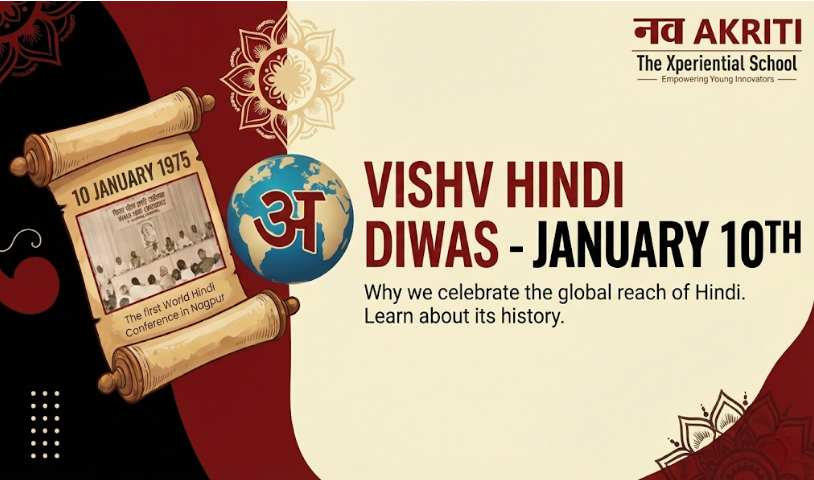
Every year on January 10th, Indians and Hindi speakers across the globe celebrate Vishv Hindi Diwas (World Hindi Day). But have you ever wondered why this specific date was chosen and how it differs from the Hindi Diwas we celebrate in September?
Let’s dive into the history and significance of this special day.
The History Behind January 10th
The choice of January 10th is steeped in history. On this very day in 1975, the first-ever World Hindi Conference was inaugurated in Nagpur, India. The conference was a landmark event inaugurated by the then Prime Minister, Indira Gandhi, aiming to present Hindi as a powerful language on the global stage.
To commemorate this historic event, the Government of India officially declared January 10th as Vishv Hindi Diwas in 2006. Since then, it has been celebrated annually to promote the Hindi language worldwide.
Vishv Hindi Diwas vs. National Hindi Diwas: What’s the Difference?
A common question many parents and students ask is: “Don’t we celebrate Hindi Diwas in September?”
Yes, we do! However, the two days have different objectives:
- National Hindi Diwas (September 14th): This day marks the adoption of Hindi (in Devanagari script) as an official language of the Union of India by the Constituent Assembly in 1949. It is primarily a national celebration within India.
- Vishv Hindi Diwas (January 10th): This day has a global focus. Its mission is to promote Hindi as an international language and to celebrate the love for Hindi among the Indian diaspora and foreign nationals worldwide.
Theme for 2026: Bridging Tradition and Technology
The celebration of Vishv Hindi Diwas often revolves around a theme. For 2026, the focus continues to be on “Hindi: From Traditional Knowledge to Artificial Intelligence.”
This theme is incredibly relevant for us at Navaakriti. It highlights that Hindi is not just a language of the past or of literature; it is evolving. From ancient wisdom (Ayurveda and Yoga) to modern tech (AI and Voice Assistants), Hindi is making its mark. Teaching our children Hindi ensures they are grounded in tradition while being ready for a future where local languages power global technology.
Why Language Connection Matters for Children
At Navaakriti, we emphasize holistic development. Encouraging children to speak and understand their mother tongue or national language offers several benefits:
- Cultural Identity: Language is the carrier of culture. Knowing Hindi helps children connect with their grandparents, festivals, and folklore.
- Cognitive Growth: Studies show that multilingual children often have better problem-solving skills and creativity.
- Global Confidence: As Hindi grows on the world stage, being proficient in it is a skill, not just a heritage.
Celebrating at Home
This January 10th, you can celebrate Vishv Hindi Diwas with your little ones in simple ways:
- Read a short Hindi story or poem together.
- Teach them a new Hindi word and its meaning.
- Share a story from your own childhood in Hindi.
Let’s take pride in our language and pass this beautiful legacy to our “masterpieces in the making.”
Happy Vishv Hindi Diwas!